Summer 25% discount on all last year's products home fashion minimalism

How to Choose the Best Summer Cooling Mat for Dogs According to Breed & Size

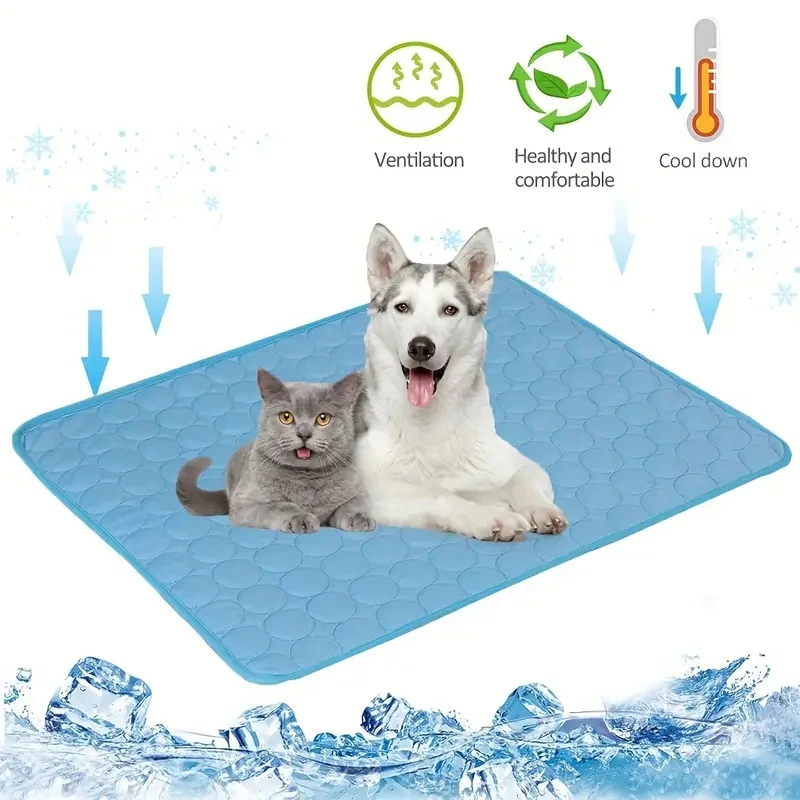
It’s 4 PM, the fan is running full speed, and your dog is still panting like it just ran a race. It didn’t. It’s just lying there.
We’ve seen this too many times to count. Every summer, dogs sprawled on tile floors, owners googling “summer cooling mat for dogs” at midnight because nothing else was working.
Most articles on this just tell you to buy any cooling mat and move on. They skip what actually matters — which size fits which dog, and why some dogs refuse to use the mat their owner bought them. We’ll get into both.
Why Dogs Need This More Than You’d Think
Dogs don’t sweat like we do. Panting does most of the work, and so do their paw pads, though that’s a much smaller surface.
So when your floor heats up and the room feels still, your dog is dealing with more than it lets on. A good summer cooling mat gives it one spot that actually stays cool — no electricity, no ice packs melting into a puddle by evening.
We wouldn’t call it a luxury item. For a dog with a heavy coat, or a short-nosed breed that struggles to breathe well even normally, this genuinely helps during peak heat hours.
So How Does the Cooling Actually Happen?
Most dog mat cooling summer pads on the market — ours included — work through a self-cooling design. No gel packs to freeze overnight. No plugging in. No chemicals.
Your dog lies down, body weight and body heat trigger the cooling, and once they get up, it resets on its own after a bit. That’s the whole mechanism.
We mention this because a lot of people assume these mats need a freezer first. They don’t. That confusion is behind a fair number of returns we’ve seen — the “ice pack under fabric” style feels shockingly cold the second a dog touches it, and most dogs just walk off.
Now, About Size — This Is Where It Gets Breed-Specific
Here’s what most blogs conveniently skip. Size isn’t a minor detail. It’s half the decision.
Small and toy breeds — Chihuahua, Pomeranian, Shih Tzu — do best with 40x30cm to 50x40cm. Anything bigger feels less like a bed, more like an open field, and small dogs tend to avoid it.
Medium breeds like Beagles, Cocker Spaniels, or your regular Indian street dog settle well into 62x50cm to 70x55cm. Enough room to stretch, not so much that it’s wasted.
Large breeds — Labradors, German Shepherds, Golden Retrievers — need the 100x75cm size. They sprawl fully when resting, and a smaller mat means half their body’s still on the hot floor.
Giant breeds, your Great Danes and Saint Bernards, need the 150x100cm. Nothing smaller really does the job.
We’ve kept all six sizes in stock — XS through 2XL — for exactly this reason. One size was never going to work for a Pomeranian and a Labrador both.
Coat Type Matters Just as Much
Size gets most of the attention, but coat type plays a big role too.
Double-coated dogs — Huskies, Golden Retrievers, Spitz breeds — trap heat close to the skin even with the AC running. They overheat faster than a short-haired dog the same size.
Then there are short-nosed breeds — Pugs, Bulldogs, Boxers. They already struggle to pant efficiently, so their usual cooling method runs at half capacity to begin with. For these dogs, a mat near their resting spot isn’t optional. It’s one of the easiest ways to cut heat stress at home.
Where People Usually Go Wrong
We’ve noticed a few patterns over the years.
Buying a smaller size to save money is the most common one. It backfires — your dog’s back half hangs off the edge, and you lose most of the actual benefit.
Then there’s placement. Even the best summer cooling mat for dogs won’t help much sitting under a window, baking all afternoon. Keep it in shade, or near airflow.
Owners also expect the mat to feel icy right away, and get disappointed when it doesn’t. It cools through contact — give it a minute once your dog settles in.
Skipping the wash is another one. Fur and drool build up fast. Good news is our dog mat for summer goes straight into the machine, so it’s not really a chore.
And some dogs just need time. If yours seems unsure about the new texture, place a familiar blanket half on, half off the mat for the first couple of days.
A Quick, Honest Note
We’re not going to pretend this suits every single dog or home. If your dog is deeply attached to a particular bed, ease them into the mat rather than swapping things overnight — cold turkey rarely works with pets.
And a mat, however good, doesn’t replace the basics. Water, shade, and avoiding walks in peak afternoon heat still matter more than any product we sell.
FAQs
Does a cooling mat actually work without a fridge? Yes — it works through contact and body heat, not freezing. No fridge or electricity needed.
How do I figure out the right size for my dog? Let your dog lie down naturally, measure the length and width, and add a few extra centimeters on each side for comfort.
Will this work for cats too? Mostly, yes. Dog mat cooling summer pads aren’t really breed or species specific — the mechanism stays the same.
Is it safe for puppies and older dogs? Yes, ours doesn’t use high-concern chemicals or anything sharp. That said, keep an eye on puppies with any new item at first, just as a habit.
How often should it be washed? Once a week in peak summer works well, sooner if your dog sheds a lot or spends most of the day on it.
Bottom Line
Choosing a summer cooling mat for dogs really comes down to two things — your dog’s size and its coat. Get those right and everything else falls into place on its own.
That’s the whole reason we size ours from XS to 2XL. A Pomeranian and a Labrador were never going to want the same mat, and we’d rather get that right than sell one size to everyone.