Summer 25% discount on all last year's products home fashion minimalism

Dog Hair Brush Remover: How to Reduce Shedding at Home Naturally

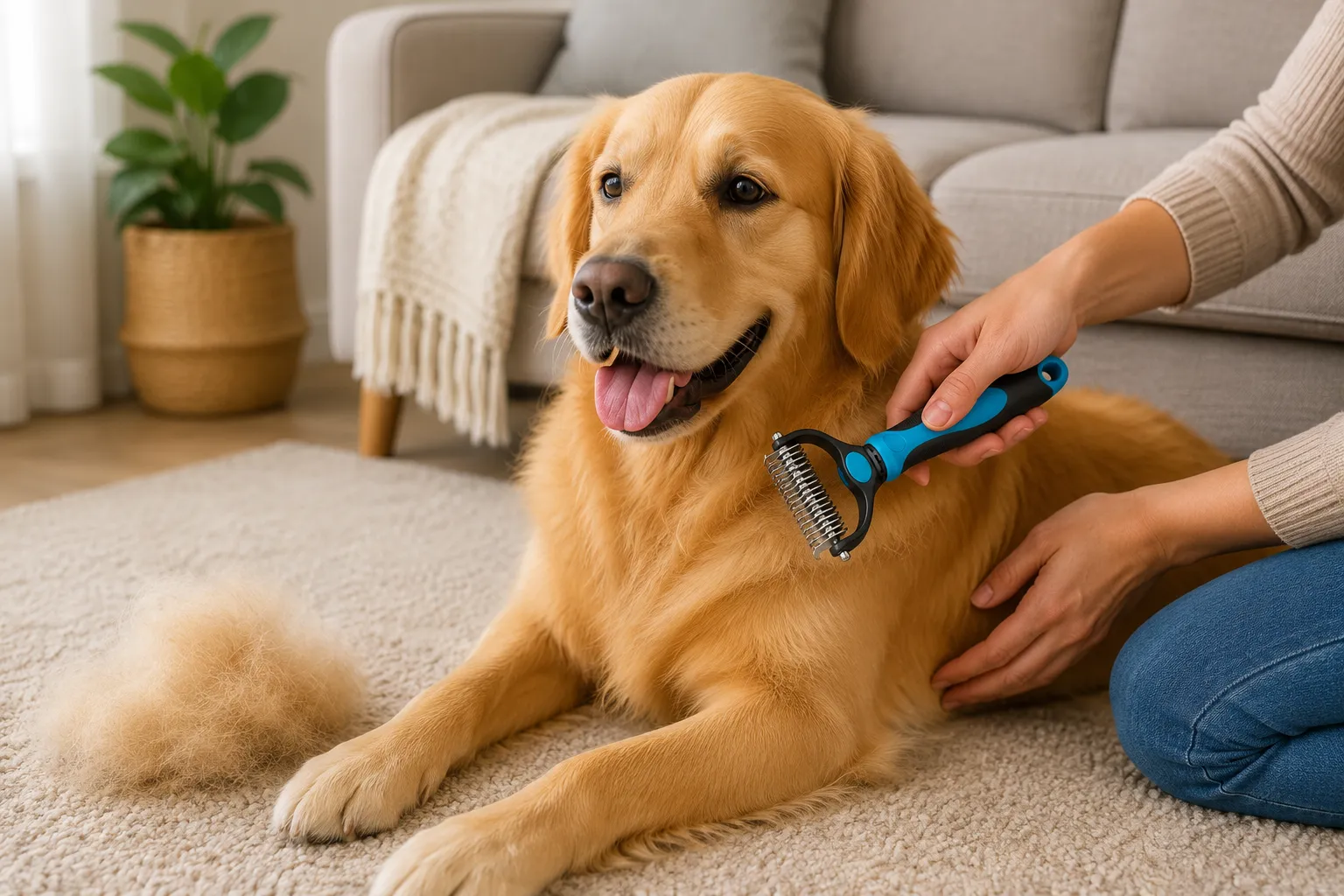
Black jeans and a dog in the house just don’t mix. You already know this if you’ve lived it. You vacuum on Sunday, and by Wednesday there’s a soft grey layer sitting on the sofa arm again, right where he naps every afternoon like he owns the place.
Most people just accept it. And to be fair, dogs shed, that part isn’t going anywhere. But here’s what we didn’t realize for a long time either — how much of that hair actually lands on your floor versus stays stuck safely inside a brush, that bit is very much in your control. We just didn’t know it back then.
This topic comes up almost every week in the messages we get from pet parents. Same complaint, slightly different dog each time. So we sat down and actually wrote out what helps, properly, instead of the usual short reply.
Why Do Dogs Even Shed This Much
Shedding, on its own, is a completely normal thing. It’s just old or damaged hair making way for new hair. Nothing wrong is happening.
But yes, some breeds shed a lot more than others. Labradors, German Shepherds, Golden Retrievers, basically anything with a thick double coat, they’re going to lose more hair than a short-coated dog like a Beagle.
Season plays a bigger part than most people expect too. Around March, and then again around October, a lot of dogs go through what’s basically a coat switch for the weather. If your dog suddenly looks like it’s shedding way more than usual in these months, that’s probably all it is.
Diet and stress can affect it as well, sure. But for most homes, that’s not really the main issue. The main issue is usually something much simpler, and much more fixable.
Honestly, the Brush Is Probably the Problem
Nobody tells you this at the pet shop counter. A regular brush, the soft plastic bristle kind, mostly just works on the top layer of fur. It looks like it’s doing something. It is, a little bit. But it barely reaches the undercoat, and that’s exactly where most of the loose hair is sitting, just waiting for its turn to fall out on its own, usually onto your sofa.
So you brush daily, and there’s still hair everywhere. It’s not that you’re doing it wrong. It’s that the brush was never built for this job in the first place.
What a Good Deshedding Brush Should Actually Do
We’ve gone back and forth on this with a lot of pet owners over time, and a few things kept coming up again and again.
It needs to reach the undercoat, not just skim the surface. A brush with two different tooth lengths handles this well, one side for regular top-coat brushing, and a denser side that gets into the thick undercoat underneath.
It has to be gentle, even on skin that’s a bit sensitive. Stainless steel teeth with rounded tips do this job properly, pulling loose hair out without scraping the skin.
And it needs to be easy to clean. This one sounds small but it isn’t, not really. If cleaning the brush turns into its own five-minute task, people just stop bothering after a week, and it ends up sitting in a drawer somewhere.
Our own 2-in-1 Stainless Pet Deshedding Brush came out of exactly this thinking. One side has 9 teeth for the everyday brushing, the other has 17 for the deeper undercoat work, so it’s really two tools in one. The blades are stainless steel, gentle enough not to scratch the coat, and the handle is plastic, which just wipes clean in a few seconds without needing anything harsh. It works on cats too, in case that’s useful in your house as well.
How to Actually Brush Your Dog So It Works This Time
Nothing complicated here, honestly.
Brush before the bath, not after. Wet fur just tangles in the brush and makes the whole thing harder than it needs to be.
Always go in the direction the hair grows, never against it. Going against the grain pulls at the skin, and dogs do remember that. Once brushing feels bad to them even once, getting them to sit still for it again becomes a whole negotiation.
Keep the strokes short. Gentle. You genuinely don’t need to press hard, let the brush teeth do the work, not your wrist.
The belly, behind the ears, near the tail, these spots trap the most loose fur and, if you’re not paying attention, mats too.
Twice a week is enough for most dogs. During the heavier shedding months, bump it up to daily, five to ten minutes is plenty.
That’s really the whole routine. Ten minutes, a couple of times a week, and most of that hair never even makes it to your floor.
Mistakes We See People Make Again and Again
Brushing too hard is probably the most common one. There’s this idea that more pressure means more hair comes out. It really doesn’t work like that. It just makes the dog uncomfortable, and over time, they start dreading brush time altogether.
Skipping the undercoat is another big one. If you’re only brushing the surface, you’re basically missing the part that matters most.
Bathing too often backfires too, more than people expect. It strips the natural oils from the skin and coat, and can actually make shedding worse instead of better.
Some people just grab an old human hairbrush lying around at home. It looks similar enough on the outside, but it genuinely can’t get through a dog’s thick undercoat the way it needs to.
And then there’s giving up too soon, which happens a lot. If your dog isn’t used to being brushed, the first few tries might involve some squirming, maybe a bit of resistance. That’s normal, don’t read too much into it. Stick with it gently and most dogs come around within a week or two.
A Few Small Things That Help Alongside Brushing
Brushing does most of the work here, but a couple of small habits support it well too.
Omega-3s, fish oil being the common one, added to the diet after checking with your vet first, can help with coat health over time. Keeping your dog properly hydrated matters more than people realize as well. And vacuuming regularly helps too, since loose hair sitting around on furniture often just ends up back on the dog through licking and rolling around on it.
None of this replaces actual brushing though. But together, it does bring the mess down noticeably.
Questions People Actually Ask Us
Which is the best deshedding brush for dogs?
One with two different tooth lengths, one for the outer coat and one for the undercoat, with stainless steel teeth that have rounded tips. That combination covers most breeds well enough.
How often should I use a dog hair brush remover?
Two to three times a week works for most dogs. During the heavy shedding season, daily brushing for about five to ten minutes makes a real, visible difference.
Can I use a deshedding brush on a puppy?
Yes, just go slow with it. Let the puppy get used to the feel of the brush first before doing a proper full session.
Does deshedding hurt my dog?
It shouldn’t, not if you’re using light pressure and going with the hair, not against it. If your dog flinches or pulls away, just ease up a bit.
Will brushing stop shedding completely?
No, nothing really stops it completely, shedding is just natural. But the right brush catches most of the loose hair before it lands on your floor, and that’s really the part that matters day to day anyway.
Final Word
You can’t stop a dog from shedding, and honestly, you shouldn’t even try. But there’s a real difference between hair falling all over your floor and hair getting caught safely in a brush before it gets there. Most of that difference just comes down to using the right tool, the right way, a couple of times a week. That’s it, really.
If you want to try it for yourself, our 2-in-1 Stainless Pet Deshedding Brush was built to do exactly what we’ve talked about here, reach the undercoat gently, without turning brushing into a fight every single time.